
Summer in Kansas City is long, and a soccer ball does not have to sit in the garage until August tryouts. Some of the best players you have watched did not get their soft feet at a fancy academy. They got them in a driveway, a basement, a patch of backyard, touching the ball a few hundred times a day until close control stopped being something they thought about. That is the quiet truth about footwork. It is built through volume, and volume is something your child can absolutely rack up at home. If your player wants quicker feet, cleaner touches, and more confidence on the ball this fall, the summer is the time to build it, and a lot of that work can happen right outside your back door.
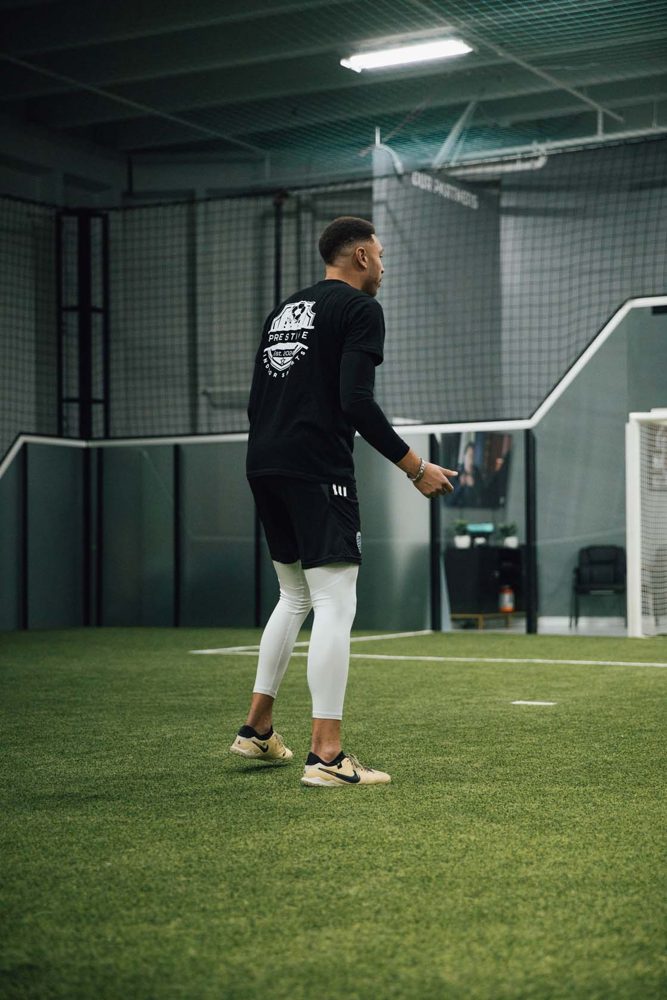
Below are seven simple, equipment-light footwork drills your child can practice at home, plus exactly what each one builds, how many reps to aim for, and one coaching cue to keep the quality high. Read it with your player. Pick two or three to start, do them most days, and watch the touches get cleaner. Then we will be honest with you about where home reps stop working and why coached reps matter, because the two are partners, not rivals.
Seven at-home footwork drills, with reps and a cue for each
You do not need cones, a net, or a turf field. A few household objects, a flat stretch of driveway or basement, and a ball your child can control will do. The goal is not to look busy. The goal is hundreds of clean, deliberate touches with both feet. Quality first, then speed. Here are the seven, ordered roughly from foundational to a little more advanced.
1. Toe taps
What it builds: light, springy feet and a feel for the top of the ball, which is the starting point for almost everything else. Reps: three sets of 30 seconds, resting briefly between sets, most days of the week. Coaching cue: stay on the balls of your feet and keep your head up, glancing at the ball instead of staring at it. The ball stays still, the feet do the dancing.
2. Foundations, also called bell touches
What it builds: quick inside-of-the-foot touches that move the ball side to side, the rhythm behind every shimmy and feint. Reps: three sets of 20 to 25 touches per set, both feet working evenly. Coaching cue: use the inside of the foot, not the toe, and keep the touches small and tight so the ball never escapes your control zone.
3. Sole rolls
What it builds: the ability to drag and shift the ball under the sole, which buys time and space when a defender steps to you. Reps: two sets of 15 rolls each direction, left to right and right to left. Coaching cue: roll with the middle of your foot, not your toe, and finish each roll balanced and ready to push the ball a new way.
4. Figure-8 dribble
What it builds: tight close control and the soft, frequent touches you need to weave through traffic. Reps: set up two objects a few feet apart and dribble a figure-8 around them for 60 seconds, then switch the leading foot. Coaching cue: take many small touches rather than a few big ones, and keep the ball within a stride at all times.
5. Wall passes
What it builds: a clean, repeatable first touch and accurate short passing, the two things that separate composed players from frantic ones. Reps: 50 passes against a sturdy wall or garage door, alternating feet, settling each return before the next pass. Coaching cue: open your hips slightly and cushion the incoming ball with the inside of your foot so it stops close, not three feet away.
6. Cone slaloms with household objects
What it builds: change of direction with the ball at your feet, plus the touch-and-cut pattern that wins 1v1 moments. Reps: line up four or five shoes, water bottles, or cans, then dribble through and back for three to five runs, resting between. Coaching cue: use the outside and inside of the same foot to snake through, and accelerate out of the last object like you just beat a defender.
7. Juggling progression
What it builds: overall ball feel, balance, and coordination, the stuff that quietly improves every other touch your player takes. Reps: start with a drop, one touch, catch. Then chase a personal best each day, aiming to add a touch or two per week. Coaching cue: lock your ankle and strike with the laces or the flat of the foot, keeping the ball low and under control rather than blasting it shoulder high.
Mix two or three of these into a short daily block and your child will build real touches over a summer. If you want a sense of how much that adds up, the chart below ranks the seven by how much skill payoff you get relative to how little space they need, which matters a lot when the only open spot is a driveway.
Notice that the smallest-footprint drills sit at the top. Your child does not need a field to get meaningfully better this summer. They need a ball, a little floor space, and the discipline to show up most days.
Coach's tip: Short and daily beats long and occasional. Ten focused minutes every day will out-build a single sweaty hour once a week, because footwork is a habit your nervous system grooves through frequent, clean repetition.
Is your home practice actually working?
Here is where parents get fooled. A kid can spend twenty minutes a day touching a ball and still not improve much, because reps only count when they are consistent and clean. Sloppy reps groove sloppy habits. The quick self-check below is the same lens our coaches use when a new player walks in. Tick every box that honestly describes your player's home routine and the verdict will update as you go.
Tick every box that describes your player. The verdict updates as you go.
Tick the boxes that describe your player to see where they stand.
Why home reps are a supplement, not a substitute
We are going to be straight with you, because that is how we coach. At-home drills are genuinely valuable. They build volume, they keep a ball at your child's feet over a long summer, and volume is the engine of ball mastery. A kid who touches the ball every day will always be ahead of the kid who only touches it at practice. So please, do the seven drills. They work.
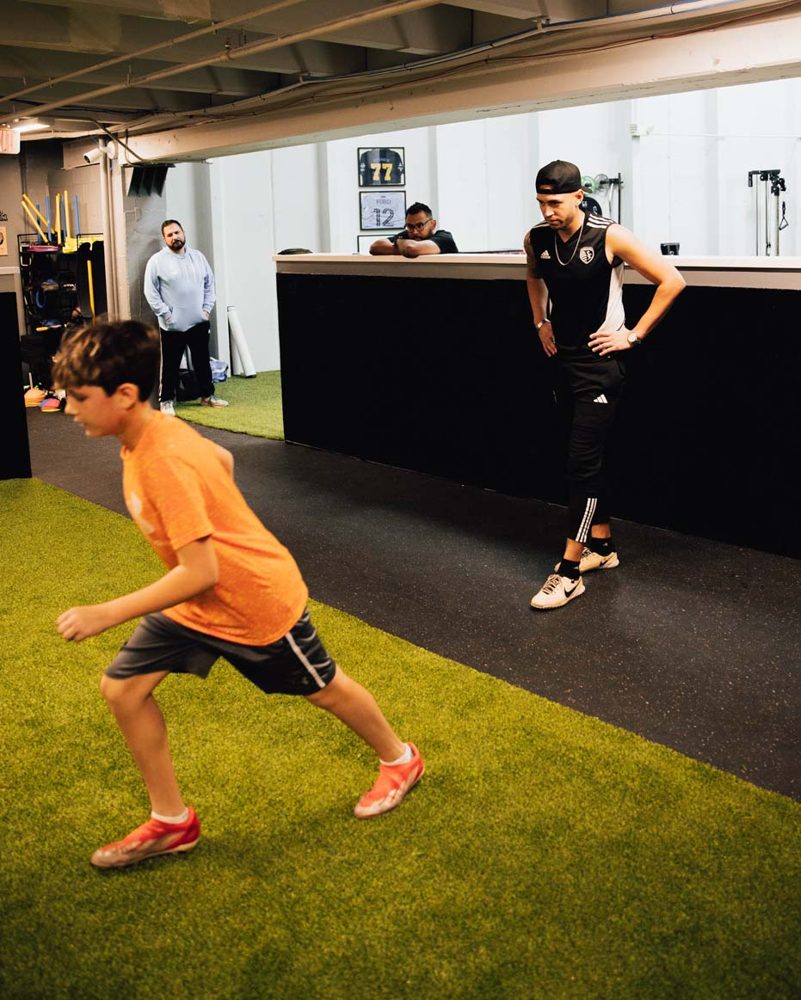
But here is the limit. Home reps build volume, and coached reps fix the mechanics underneath that volume. A child practicing alone cannot see their own plant foot drifting, their own posture collapsing, or the tiny technical flaw that is quietly grooving deeper with every rep. They are repeating whatever they already do, good or bad. A coach watches how a player actually moves, catches the flaw the player cannot feel, and corrects it before it becomes a habit. That is the difference between a thousand reps that improve a player and a thousand reps that just lock in the same mistake. The widely shared guidance from the American Academy of Pediatrics at HealthyChildren.org stresses age-appropriate skill development and qualified instruction, and that is exactly the gap structured sessions fill.
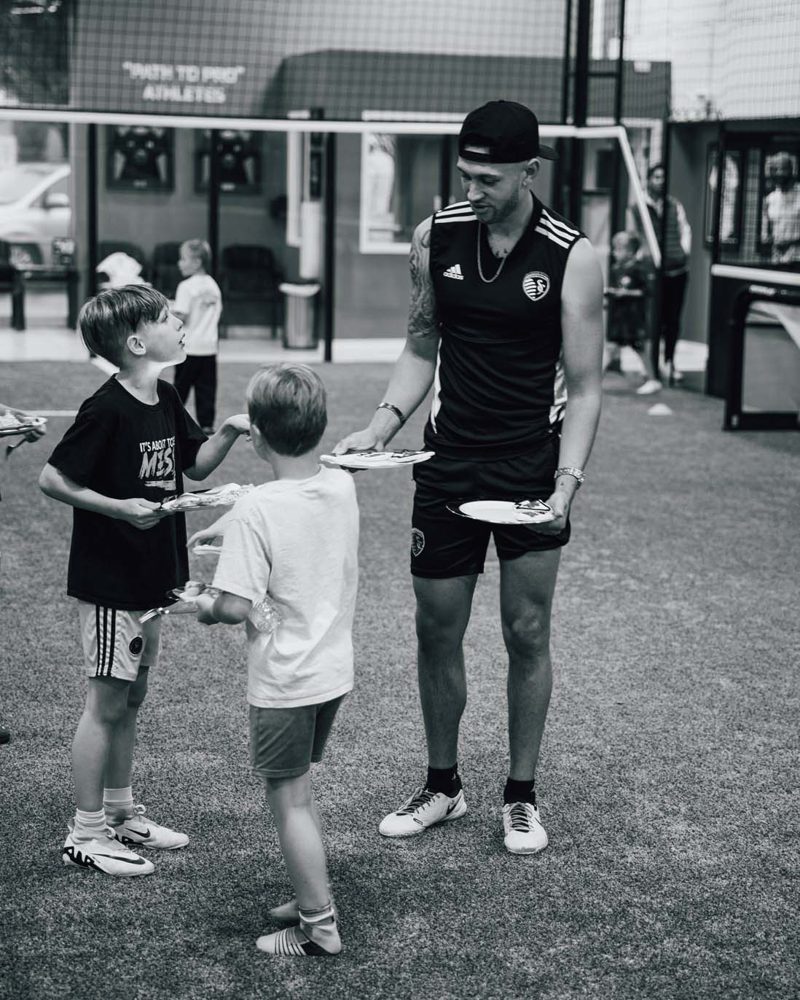
This is where our structured indoor training in Johnson County comes in. In a coached session, the volume your child built at home gets refined into clean, repeatable technique under real pressure. We watch the mechanics, correct in real time, and tie every touch back to a game moment. And because we train indoors year-round in air-conditioned comfort, a Kansas City summer heat index never cancels a session, so the progress is steady instead of stop-and-start. You can read about the coaches who run these sessions on our coaches page.
Want your child's home reps to actually transfer?
Tell us their age and what they are working on, and we will point you to the right session.
Building a simple summer routine that sticks
The best routine is the one your child will actually do, so keep it small and consistent. Pick two or three drills, do them most days for ten to fifteen minutes, and rotate in a new one every couple of weeks to keep it fresh. Track juggling personal bests on the fridge. Celebrate the streak, not the perfection. Then pair that home volume with regular coached sessions so the mechanics stay clean while the reps pile up. Families across Overland Park, Olathe, Leawood, Lenexa, Prairie Village, and Shawnee use exactly this combination, home reps plus coached reps, to make a real jump before fall tryouts. If you want to layer in focused one-on-one work, our private soccer training in Overland Park stacks naturally on top of a good home routine.
Give your child a ball and these seven drills this summer, and give them a coach to fix what they cannot see on their own. That combination is how good touches become great ones. When you are ready to add the coached piece, we would love to meet your player and build them a plan. You can see how to sign up or just reach out and ask.
Frequently Asked Questions
How much should my child practice footwork at home each day?
Ten to fifteen focused minutes most days of the week is plenty to start and far more effective than one long session once a week. Footwork is grooved through frequent, clean repetition, so consistency matters more than length. As your child builds the habit, they can naturally add time, but short and daily is the foundation.
What equipment do we need for these at-home drills?
Almost none. A ball your child can control and a flat stretch of driveway, basement, or backyard covers most of the seven drills. For cone slaloms you can use shoes, water bottles, or cans, and for wall passes you just need a sturdy wall or garage door. The point is volume of touches, not gear.
Will practicing at home alone be enough to really improve?
Home reps build the volume that drives ball mastery, so they help a lot, but they are a supplement rather than a complete answer. A child practicing alone cannot see their own technical flaws, which means they can groove mistakes as easily as good habits. Pairing home volume with coached sessions, where a coach fixes the mechanics underneath, is what turns practice into lasting improvement.
Why does indoor training matter during a Kansas City summer?
Our summers can hit a heat index that makes outdoor field time unsafe and unreliable, and lost weeks are lost progress. Training indoors at our air-conditioned Overland Park facility removes that variable, so sessions never cancel for heat or storms. Consistency is the biggest factor in skill development, and a year-round indoor home delivers it.
Where is Prestige Indoor Sports located and how do we get started?
We are at 7373 W 107th St, Overland Park, KS 66212, in the heart of Johnson County, an easy drive for families from Overland Park, Olathe, Leawood, Lenexa, Prairie Village, Shawnee, and the wider Kansas City metro. You can reach us at (913) 568-8145 or through our contact page to book a session or ask which program fits your player. We will assess your child first and start them at the right level.
Prestige Indoor Sports | Kansas City Metro Area | (913) 568-8145 | 7373 W 107th St, Overland Park, KS 66212
Ready to Get Started at Prestige Indoor Sports?
Book a free assessment with a Johnson County coach and put a real plan behind your player's development.